Value
The bundle saves money, so callers keep it instead of buying items one by one.
Case study 01 · NatureLand · Subscription
Loyal parents kept calling to change their monthly diaper bundle. I used design thinking to turn that friction into a subscription they control, on the app and the website.
Visit NatureLand ↗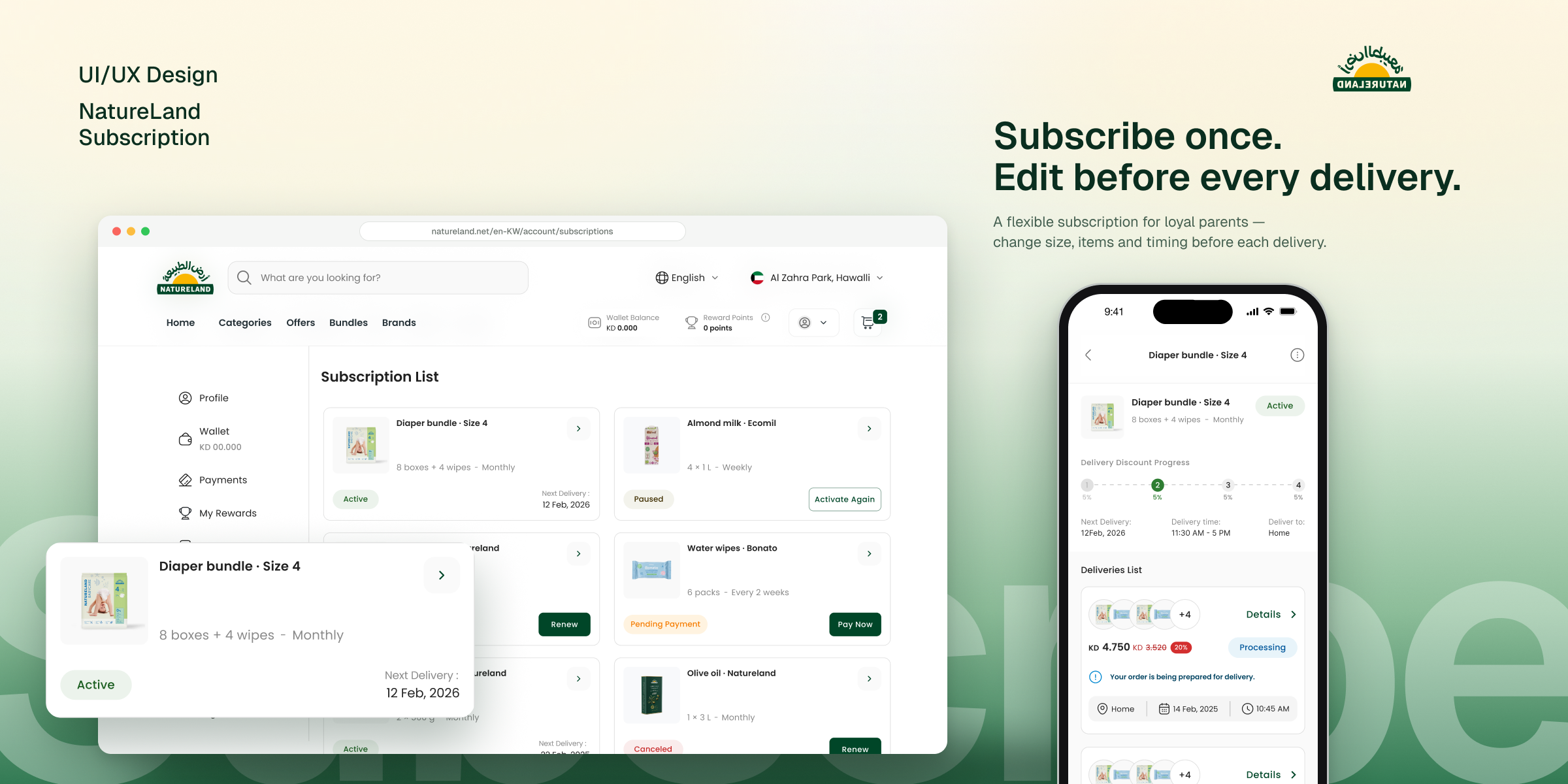
At a glance
Calls about bundle changes almost disappeared.
−96%
support calls about bundle changes
About 40 a week before, about 7 a month after launch
3.7×
payment completion, Flow A vs Flow B
44% vs 12% · 500 users per flow · Kuwait, one month
118
active subscribers across the GCC
Net of cancellations and pauses, three months after launch
Flow A
launched to all users
Chosen interval, growing discount, edit, pause and cancel
Process
Five stages, each one feeding the next. The sections below follow the same order.
Reviewed 80 random callers and profiled customers with RFM.
Framed one problem statement and two How Might We questions.
Mapped ideas by impact and effort, and chose a subscription.
Designed two subscription flows for the app and the website.
A/B tested both flows with 1,000 users for one month.
01 · Context
Natureland sells monthly diaper bundles in six sizes: 4 packs of water wipes plus 8 to 10 boxes of diapers, about 10% below list price. Before this project, “Reorder” repeated the last bundle exactly. When a baby moved up a size or a family needed fewer wipes, the only option was to call.
~40
calls and tickets a week
about bundle changes, around 520 every three months
Manual
edits
support and admin retyped every changed order by hand
6
bundle sizes
size 1 to size 6, ordered about once a month
Steps 4 to 6 are where the experience broke: the site sent people to the phone, and the team did the work by hand.
02 · Empathize
With no time for interviews, the team reviewed the profiles of 80 random callers from the three months before the project, each counted once. All 80 were active, loyal customers by purchase, payment, repeat rate and the marketing team’s score.
Two needs, one group of people: flexibility (change the bundle) and routine (have it arrive on its own).
The bundle saves money, so callers keep it instead of buying items one by one.
Callers reorder steadily, about once a month. They already behave like subscribers.
Babies move up a size every few months, so the same request comes back again and again.
Patterns shown; exact figures under NDA.
Persona · built from the call review
Mother of a 10-month-old · Kuwait City · orders on her phone
03 · Define
I turned what the callers wanted into one problem statement and two How Might We questions, then listed the assumptions to test before designing.
How might we turn repeat buying into a subscription that delivers on its own and lets people change size and contents before every delivery?
How might we keep the bundle’s savings and give people a reason to stay subscribed?
| Assumption | How we tested it | |
|---|---|---|
| Most changes are a new size, a box count or wipes | Survey Q2 | |
| “Regular delivery” means automatic delivery at a set interval, editable before each one | Survey Q6 and Q7 | |
| The 80-caller review represents all callers | Survey Q1, compared with the review’s 86% and 48% | |
| The business keeps the bundle discount after the contents change | Meeting with the business team |
04 · Ideate
Ideas were grouped by the need they answer, then placed by their impact on calls and their cost to build.
05 · Validate
Interviews were not possible, so I designed a 10-question Google Form for callers, sent before the subscription was designed. Q1 repeats the call review’s funnel, so the survey checks the review before it adds anything new.
Q1 sorts people into three groups: a bundle change, a change plus regular delivery, or another reason. Q2 to Q5 ask what they wanted to change and why.
How people decide when to reorder, and what would stop them from automatic delivery, read separately for each Q1 group.
How steady their use is, what calling gives them that the site does not, and one open question.
| Requirement | Why | Source |
|---|---|---|
| Delivery at a chosen interval, monthly by default | Most callers reorder when diapers run low or on a fixed day, and they already reorder about monthly | Survey Q6 · RFM |
| Automatic delivery, with a reminder | Many reorder only when they remember, sometimes late | Survey Q6 |
| Change the size inside the subscription | A new size is the most common change and the main barrier to automatic delivery | Survey Q2, Q7 |
| Edit box count and wipes before each delivery | Use changes from month to month | Survey Q2, Q8 |
| A discount that grows for staying | Price is the main reason people keep the bundle | Survey Q4 · RFM |
| A summary to confirm before each delivery | Many called just to be sure the order was right | Survey Q9 |
| Pause or cancel at any time | Commitment worried people who only wanted a change | Survey Q7 |
Survey results are summarized as findings; their figures are not shown.
06 · Prototype
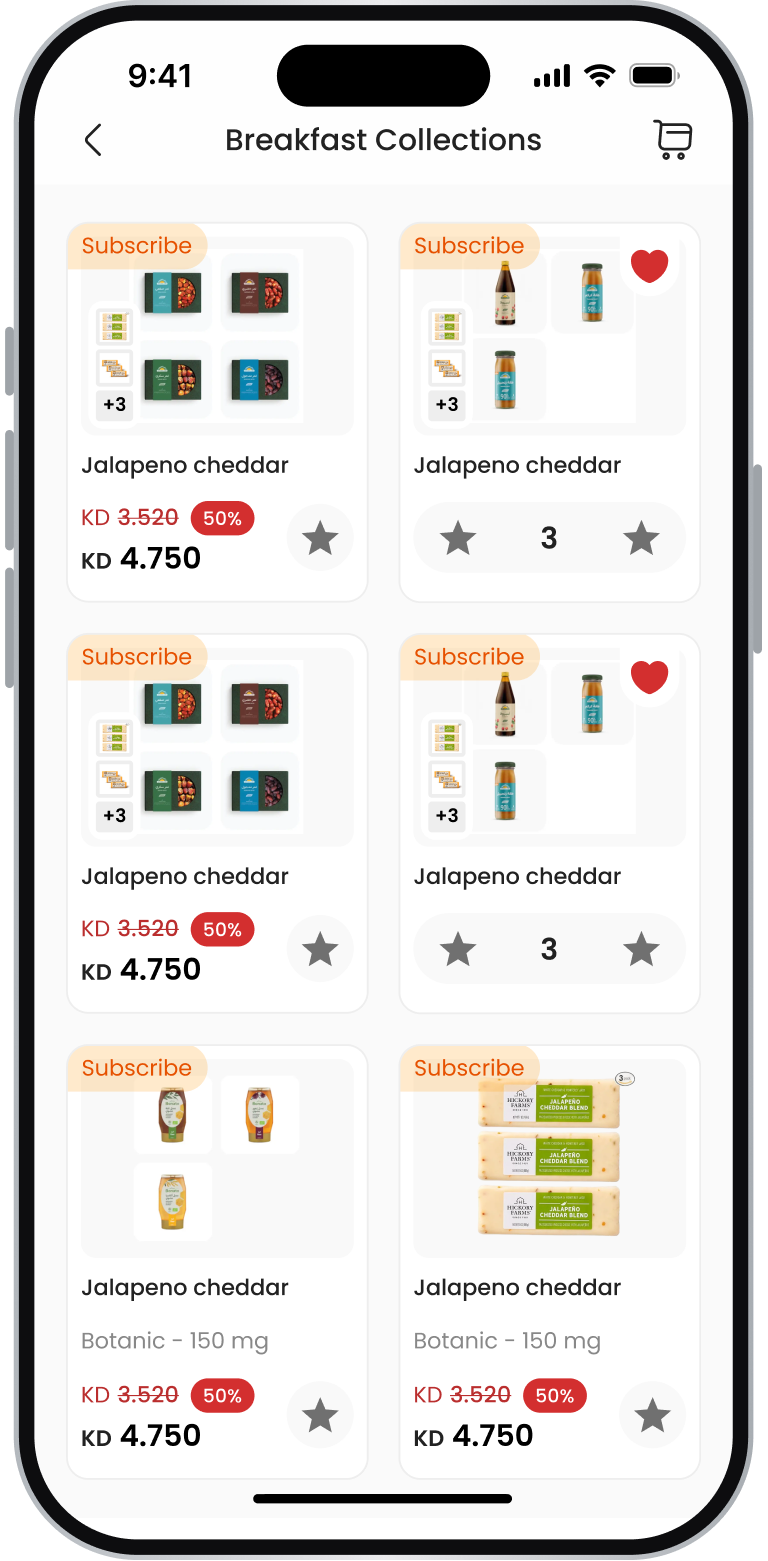
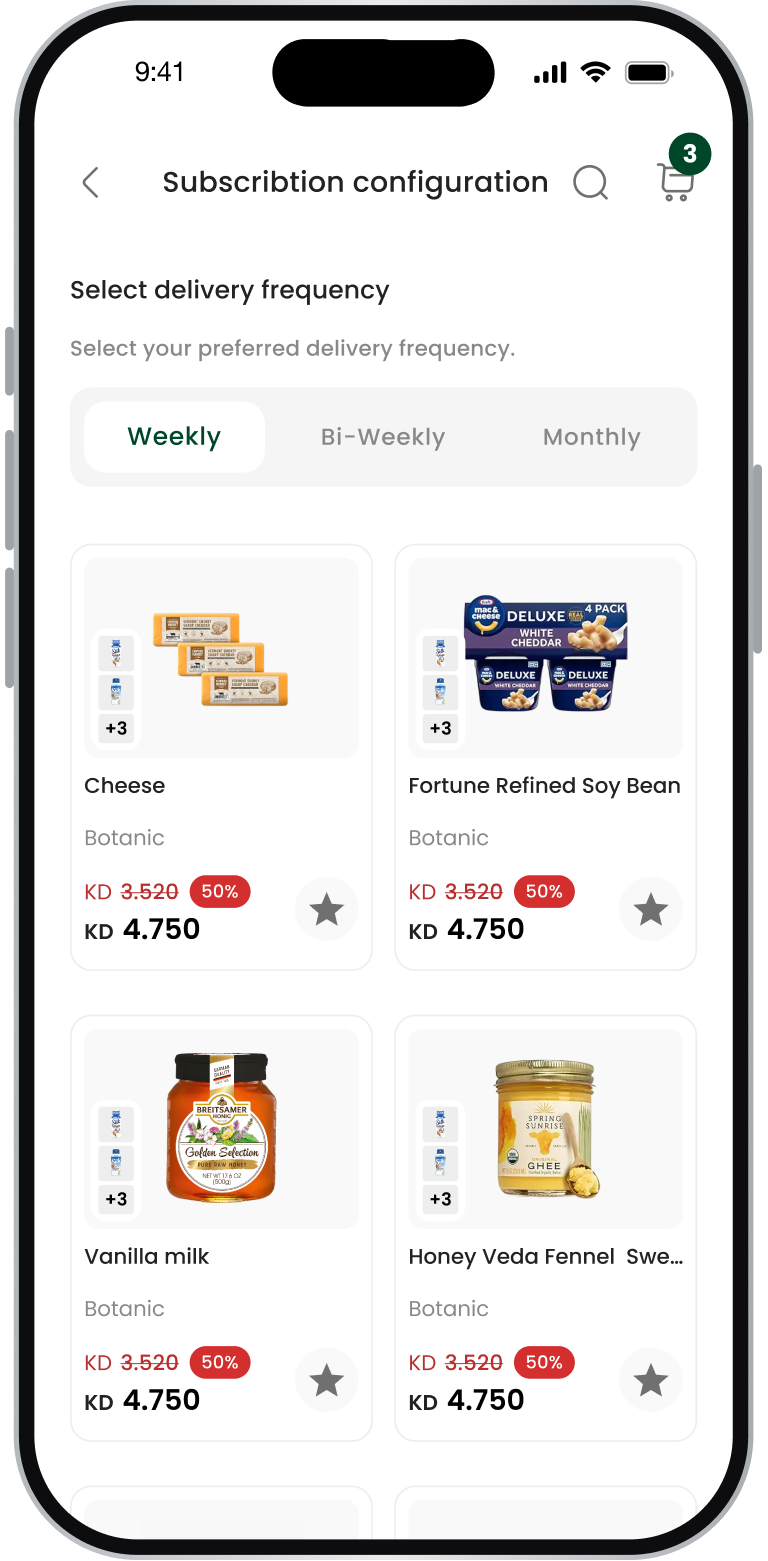
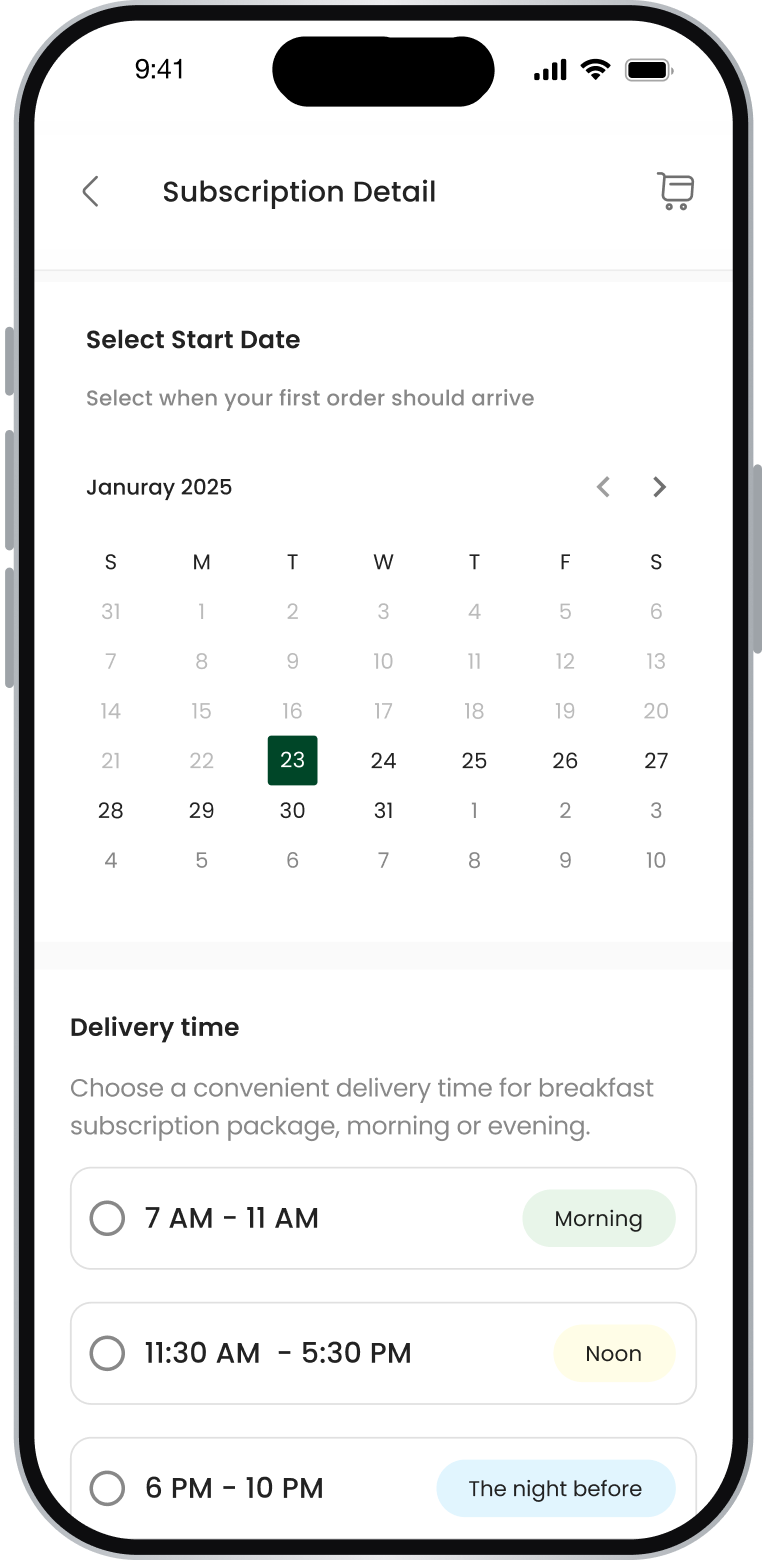
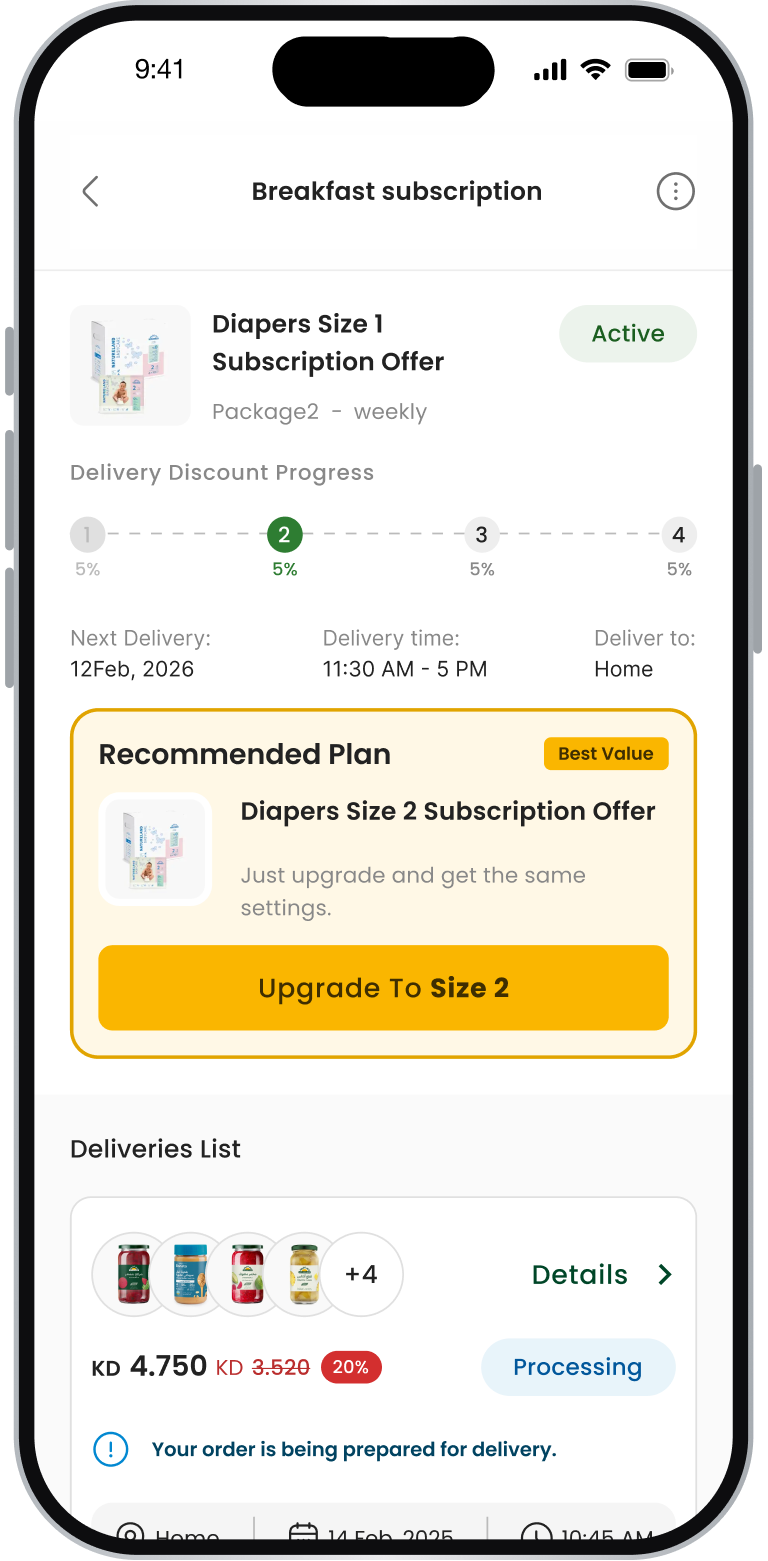
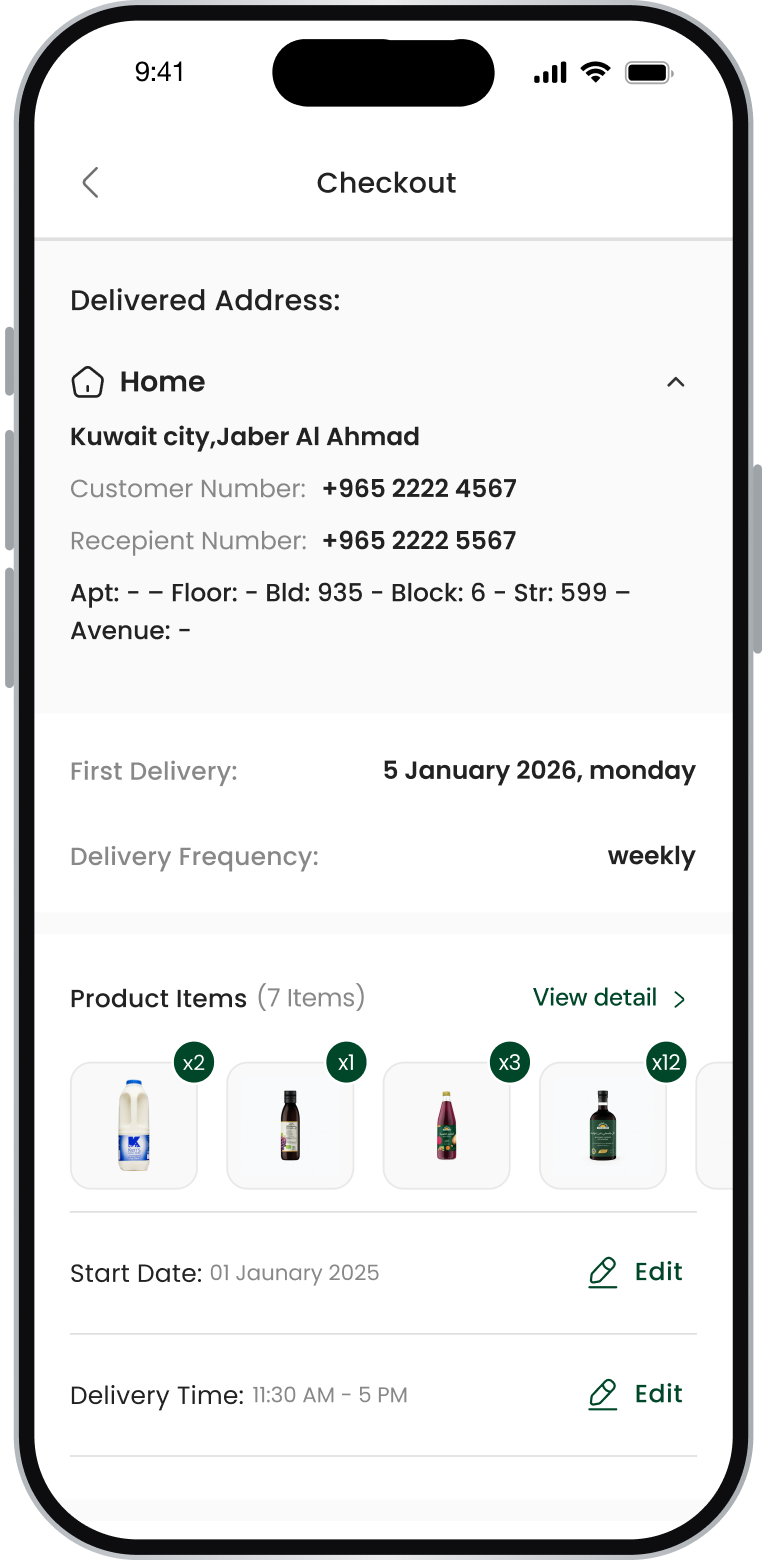
Flow A puts subscription inside the shopping path. Every bundle card carries a Subscribe badge, and from the bundle’s page people choose Subscribe instead of Add to cart, adjust the items, pick an interval, set when and where it arrives, and pay — all in one continuous flow.
07 · Test
1,000 active users in Kuwait were split at random, 500 per flow, and both flows ran for one month in the same period. We measured payment completion: of the users who tapped Subscribe and reached the cart, the share who completed payment.
Payment completion after Subscribe → cart
+32 points
difference in payment completion between the flows
44% vs 12%
3.7×
higher payment completion with Flow A
Than with Flow B
500 + 500
users per flow
Kuwait, same month, random split
08 · Outcome
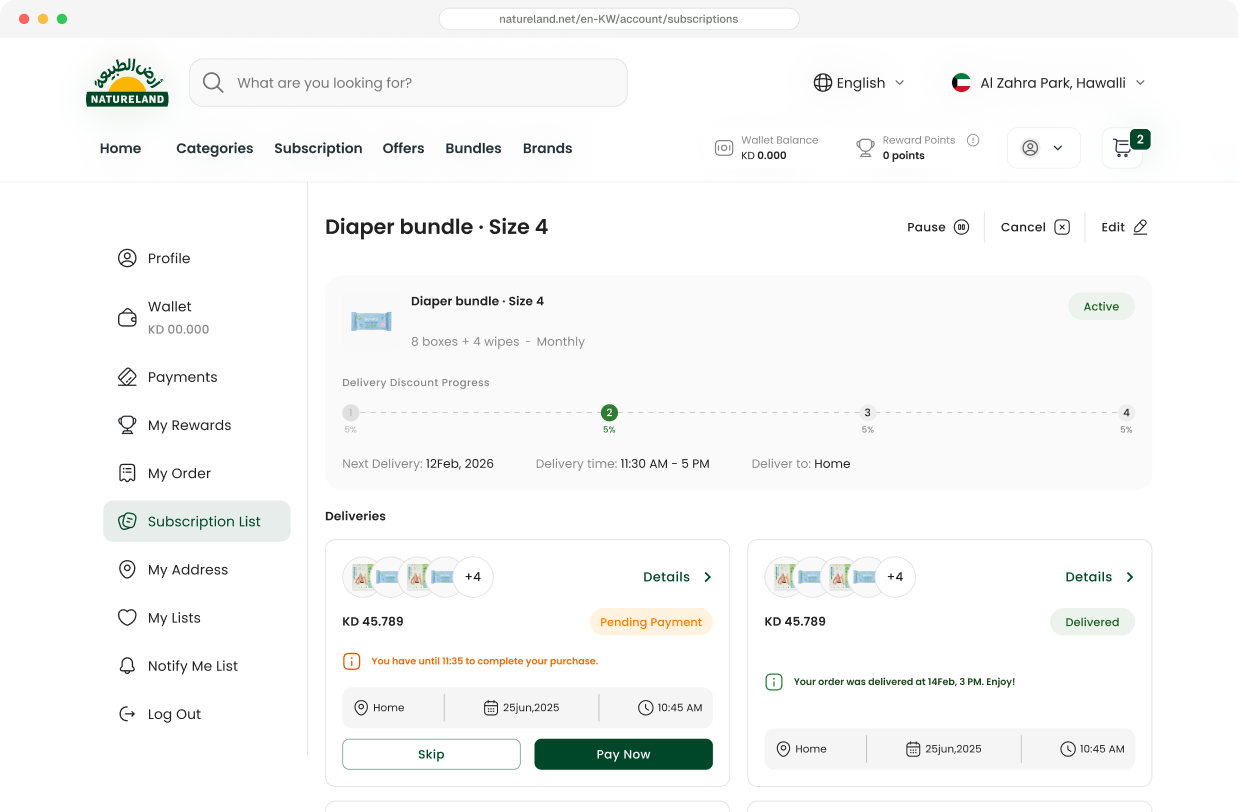
Flow A launched across the GCC. The subscription now delivers at a chosen interval, gives a discount that grows with each delivery, and lets people edit, pause or cancel at any time.
Before
~40 calls and tickets a week
About 173 a month, each one edited by hand
After
~7 calls a month
About 96% fewer calls about bundle changes
Three months in
118 subscribers
Active across the GCC, net of cancellations and pauses
A reason to stay subscribed, answering the “price” finding.
09 · Reflection
Three lessons I carry into every project, and what I would do next.
Support calls were the clearest signal we had. Reviewing 80 of them shaped the whole project.
People commit to automatic delivery only when they can change it before every delivery.
Both flows met the same requirements. The route through them made a 3.7× difference.